


Key Challenges in Contacting Applications
Balancing Electrical Performance and Connection Strength
In contact applications, it is not only mechanical strength that matters – the electrical resistance of the joint is often the decisive factor. Particularly demanding are dissimilar material combinations such as aluminum-copper (Al-Cu), which are widely used in high-voltage busbars for electric vehicles or in industrial automation. Here, only a minimal contact resistance ensures reliable and efficient current flow.
Conventional spot-joining technologies often fail to ensure the required mechanical and electrical properties in overlap joints. The main reasons are insufficient interlocking of the components and the physical limitations that arise especially when joining dissimilar materials.
High production costs as a market disadvantage
In series production of contacting joints – e.g. for busbars or power distribution rails – every second and every gram of material counts. Every unnecessary processing step, each additional material, and any extended cycle time add up to significant additional costs. Added to this are rising investment costs: longer cycle times require more machine capacity, more complex automation, and consequently higher equipment costs.
In daily operation, additional factors such as frequent tool changes, time-consuming cleaning cycles, higher scrap rates, or unexpected production downtimes impact profitability. Especially with dissimilar material combinations such as aluminum-copper (Al-Cu), conventional spot-joining technologies quickly reach their limits.

ContactStir®
Superior Performance for Next-Generation ContactingContactStir® is a spot welding process specifically developed for contacting applications, addressing the typical challenges of series production: high contact resistance, limited mechanical strength in dissimilar material joints, and rising process costs.
Compared to conventional spot joining technologies, ContactStir® delivers a solution that convinces technically, ensures the highest quality, and at the same time guarantees maximum cost efficiency:
- Excellent electrical conductivity: Ensures minimal resistance and optimal current flow – ideal for high-performance electrical applications.
- Exceptional Joint Strength: Combines the advantages of both metallurgical and mechanical bonding, resulting in durable and resilient welds.
- High Efficiency: Optimized tool life and short process times significantly reduce manufacturing costs while increasing production capacity.
- Cost-Effectiveness: Lower costs per weld point and reduced investment requirements make ContactStir® a highly economical solution for large-scale production.
- Clean and Environmentally Friendly: Like conventional FSSW, the process operates without filler materials, fumes, or emissions – ensuring a clean production environment.
- Reliable in Series Production: ContactStir® delivers reproducible and consistent results, even with high volumes and complex components.
- Easily Automatable: ContactStir® can be flexibly integrated into any manufacturing environment – as a compact manufacturing cell, a module on an industrial robot, or a manually operated manipulator. This provides high production flexibility and simple process integration.


Applications for ContactStir®

E-Mobility
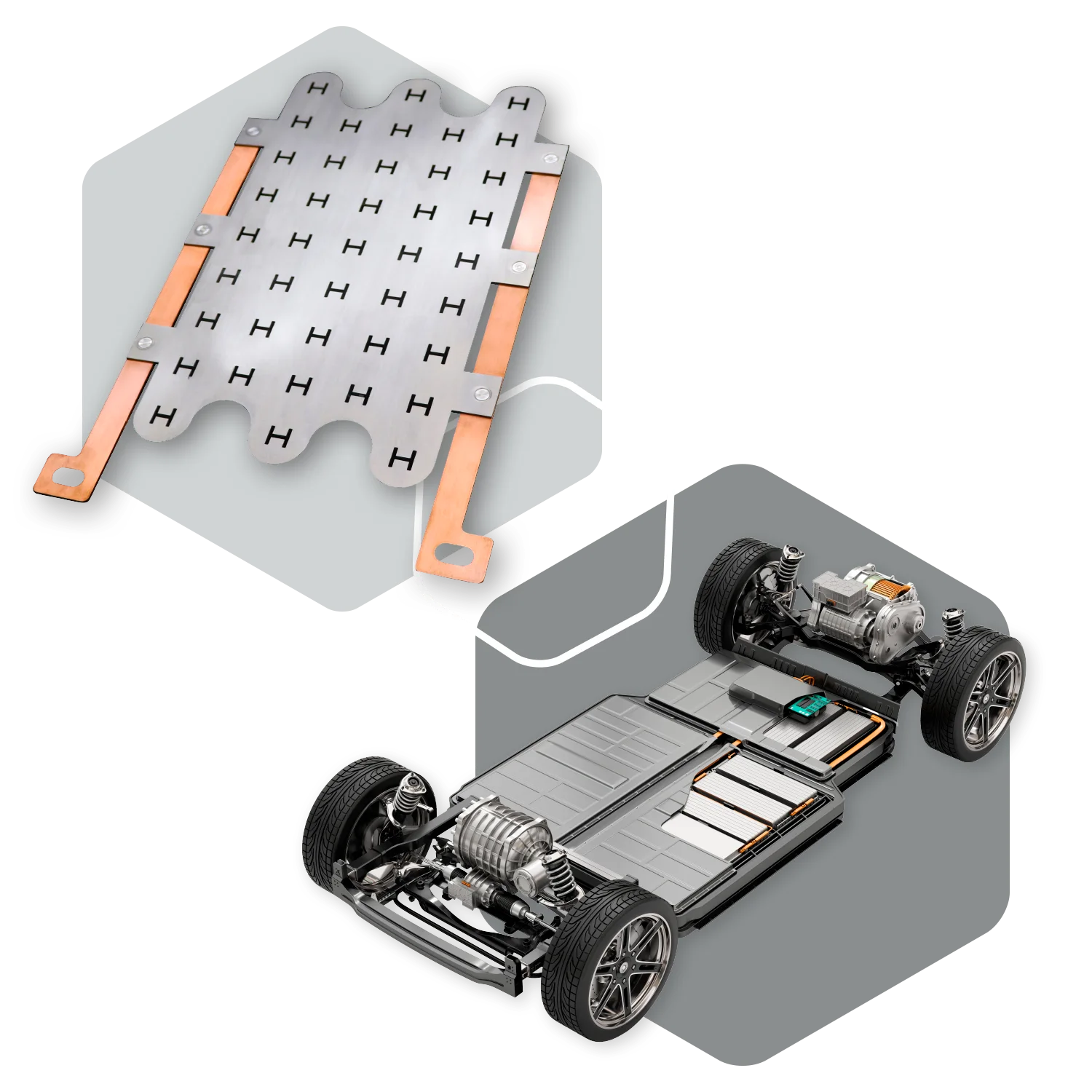
Charging Systems

Are you interested in determining the feasibility of a new concept using friction stir welding? Or do you need support in selecting the most suitable system for series production in your application?
Please contact us directly – we would be happy to advise and support you.